
Running an affiliate marketing website without strong product automation is like building a house without a foundation. Content Egg and Datafeedr are two widely used WordPress affiliate plugins that help marketers import products, sync pricing, and build scalable affiliate stores. But in 2026, which one actually fits your workflow better?
At ELKING, we tested both tools across multiple affiliate websites. We evaluated everything from autoblogging capabilities to price comparison features and WooCommerce product syncing. In this guide, we break down the key differences to help you decide which plugin is the right choice for your affiliate automation strategy—and which one earns our Maven pick.
Content Egg Vs. Datafeedr: Quick Comparison
Before getting into the details, here is a side-by-side snapshot of both plugins.
| Feature | Content Egg | Datafeedr |
|---|---|---|
| Pricing Model | One-time ($49.99–$99.99/yr) | Monthly ($49–$249/mo) |
| Affiliate Networks | 30+ | 40+ |
| Merchant Count | Varies by network | 27,000+ |
| Product Database | API-based real-time | 1 billion indexed |
| WooCommerce Sync | Yes | Yes |
| Autoblogging | Built-in | Via saved searches |
| AI Content Generation | Yes (GPT, Claude) | No |
| Price Comparison | Yes (GTIN/EAN matching) | Yes (Comparison Sets plugin) |
| Price History Tracking | Yes | No |
| Price Drop Alerts | Yes | No |
| Content Modules | Videos, images, news, coupons | Products only |
| Templates | 20+ built-in | Limited (WooCommerce themes) |
| Bridge Pages | Yes | No |
| Link Cloaking | Built-in | No |
| Unlimited Sites | Up to 10 (top plan) | Yes (all plans) |
| Free Trial | No | 30-day money bacK |
What Is Content Egg?
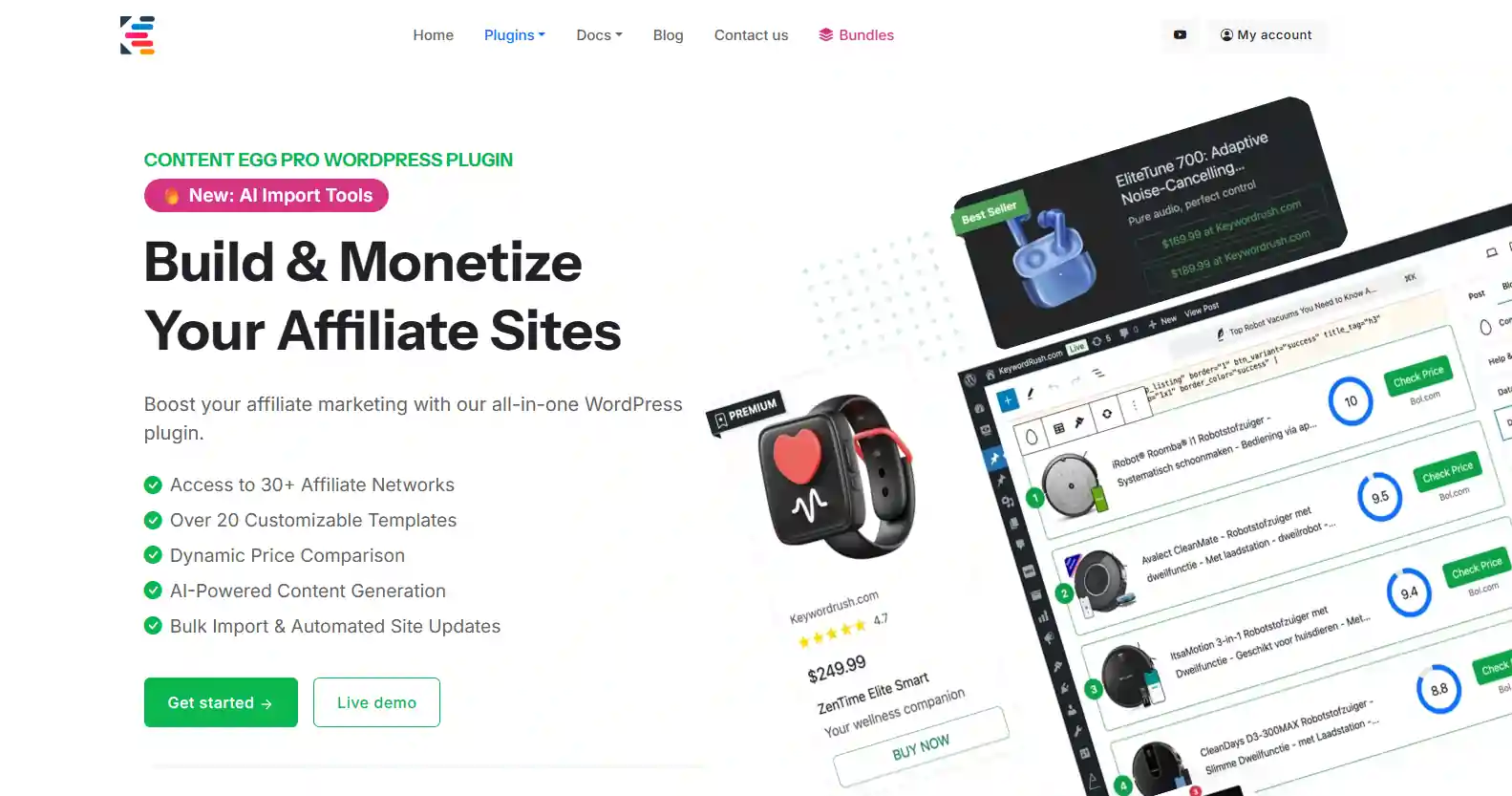
Content Egg is an all-in-one affiliate plugin built for WordPress by KeywordRush.
It connects to 30+ affiliate networks and allows you to pull product data directly into your posts. The plugin includes price comparison blocks, autoblogging features, coupon modules, and AI-assisted content generation tools. It is currently used on over 30,000 active websites.
Content Egg supports major networks such as Amazon, eBay, AliExpress, AWIN, CJ Affiliate, Walmart, and others. It also allows product imports through CSV, XML, and JSON feeds.
In our testing, the setup process was straightforward. You simply activate a module, add your API key, and begin importing products within minutes.
Build Smarter Sites with Content Egg
Datafeedr Overview
Datafeedr is a WooCommerce-focused affiliate store builder that connects your site to a large product database.
It indexes approximately 1 billion products from more than 27,000 merchants across around 40 affiliate networks. Datafeedr operates through a central database known as the “Datafeedr Factory,” which stores and delivers product data directly to your WordPress site.
The plugin is designed for marketers building full affiliate stores rather than content-based sites. You can create saved searches that automatically populate store categories, while outdated or expired products are removed automatically to keep listings current.
In our testing, Datafeedr felt less like a content plugin and more like a full store management system built specifically for WooCommerce-based affiliate websites.
Scale Affiliate Profits Using Datafeedr Tool 🚀
Autoblogging Features Head to Head
Autoblogging is where affiliate marketers save the most time. Both plugins offer automation, but the approach differs.
Content Egg Autoblogging Approach
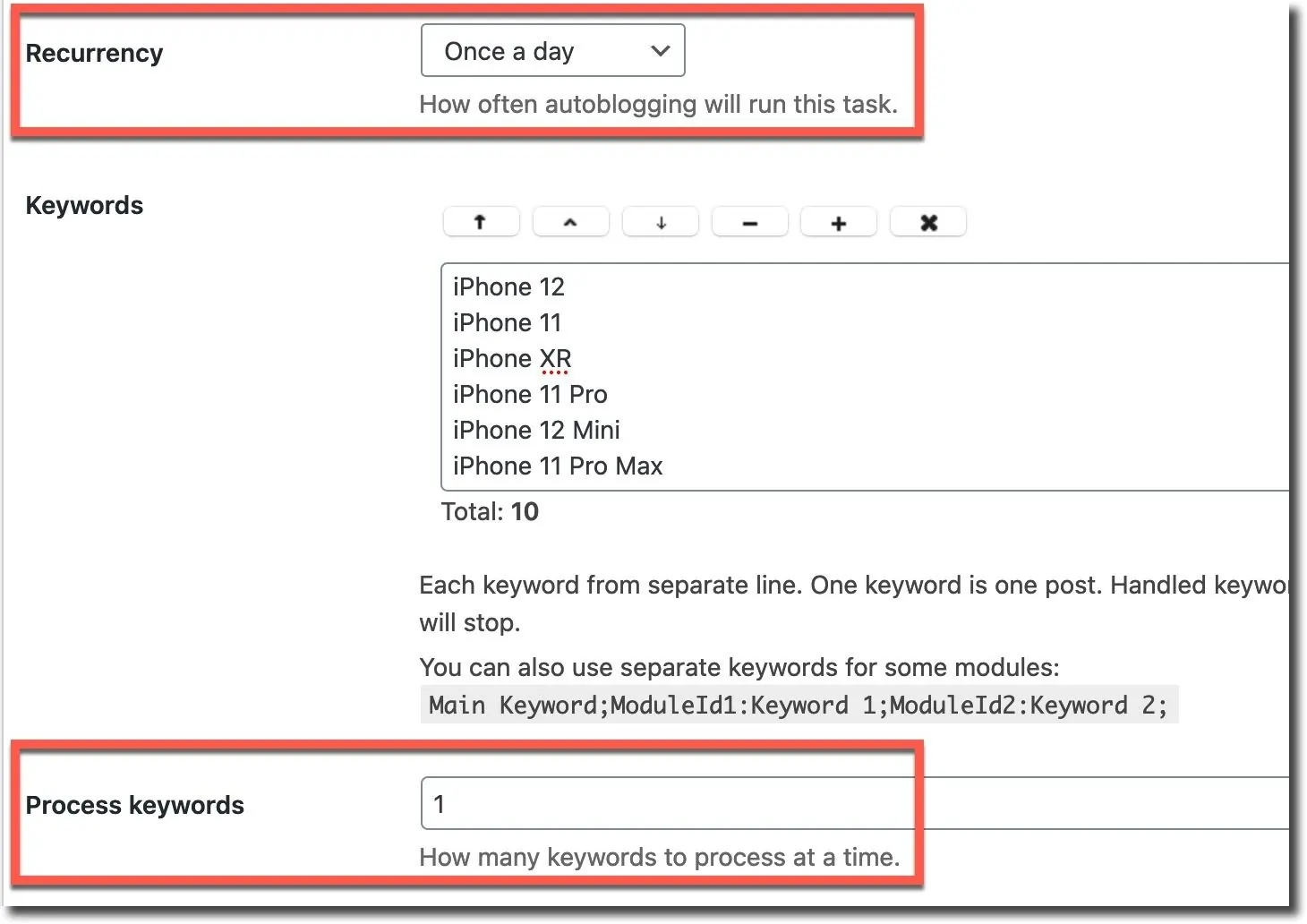
Content Egg includes a built-in autoblogging module that allows you to automate content creation workflows.
You can provide a list of keywords, and the plugin will generate posts that automatically include embedded affiliate products. It also supports scheduled auto-imports, which periodically check for new products based on your configured settings. With bulk keyword import, you can generate multiple product-focused posts in a single batch.
When combined with its AI content generation features, Content Egg can create titles, product descriptions, and review-style content with minimal manual input.
In our testing on a niche site, we used the AI-powered autoblogging feature to pull products, generate descriptions using GPT-based outputs, and publish posts on a scheduled basis. The workflow performed reliably and proved effective for building hands-off affiliate content at scale.
Datafeedr Autoblogging Approach
Datafeedr handles automation in a different way. Instead of generating posts, it uses saved product searches that automatically add relevant products to your WooCommerce store.
When a merchant adds a new product that matches your saved criteria, Datafeedr automatically imports it into your site. Similarly, expired or unavailable products are removed automatically, helping keep your store inventory up to date without manual intervention.
However, Datafeedr does not focus on content generation. It does not create blog-style posts, AI-written descriptions, or keyword-based articles. Its automation is centered entirely around maintaining and updating structured product listings within a WooCommerce store environment.
- Winner: Content Egg
Content Egg takes autoblogging by a clear margin. Built-in AI content generation and keyword-based post creation give it a real edge for marketers who want content-rich affiliate sites, not just product stores.
Product Sync and Updates Compared
Keeping prices and availability accurate is critical for any affiliate product website.
Content Egg Product Sync
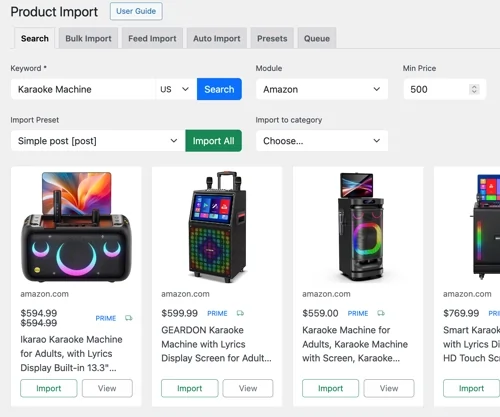
Content Egg automatically updates prices at custom intervals, allowing you to control how frequently product data is refreshed from affiliate APIs. It also includes an “update by view” mode, where pricing is refreshed each time a visitor loads a page, ensuring users see the most up-to-date information.
The plugin also integrates with WooCommerce through two-way syncing. You can import Content Egg products as WooCommerce items or connect affiliate offers with existing products. This keeps pricing and stock information synchronised automatically without manual updates.
Datafeedr Product Sync
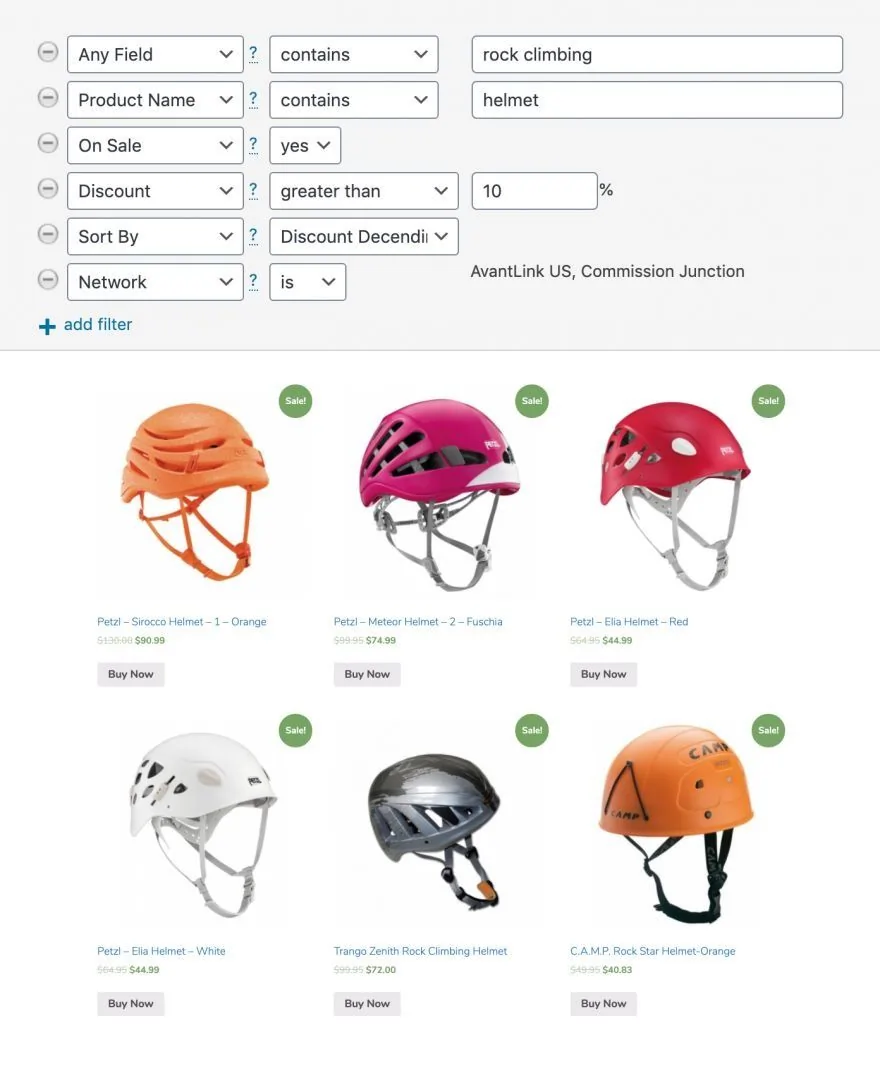
Datafeedr updates product information automatically based on your configured schedule. Prices, descriptions, images, and affiliate links
roducts that merchants discontinue get removed from your store. New products matching your saved searches get added. The whole cycle runs in the background.
With access to roughly 913 million affiliate products, the data pool is enormous. You are unlikely to run out of products in any niche.
- Winner: Datafeedr
Datafeedr edges ahead here. Automatic removal of expired products and auto-addition of new matches keeps stores cleaner. The sheer scale of its product database is hard to beat for store-based affiliate sites.
all refresh without manual input.
Price Comparison Capabilities
Price comparison is a key revenue driver for affiliate deal sites and coupon-based websites.
Content Egg Price Comparison
Content Egg builds dynamic price comparison blocks using GTIN/EAN product matching. It pulls offers from multiple affiliate networks and displays them in a single comparison table.
The plugin also includes price history tracking with visual charts, allowing users to see how product prices have changed over time. This transparency helps build trust and can improve conversion rates. In addition, price drop alerts notify subscribers when a product reaches a lower price point.
In our testing with electronics products, the GTIN matching feature successfully grouped offers from Amazon, eBay, and AWIN merchants into a single, clean comparison block.
Datafeedr Price Comparison
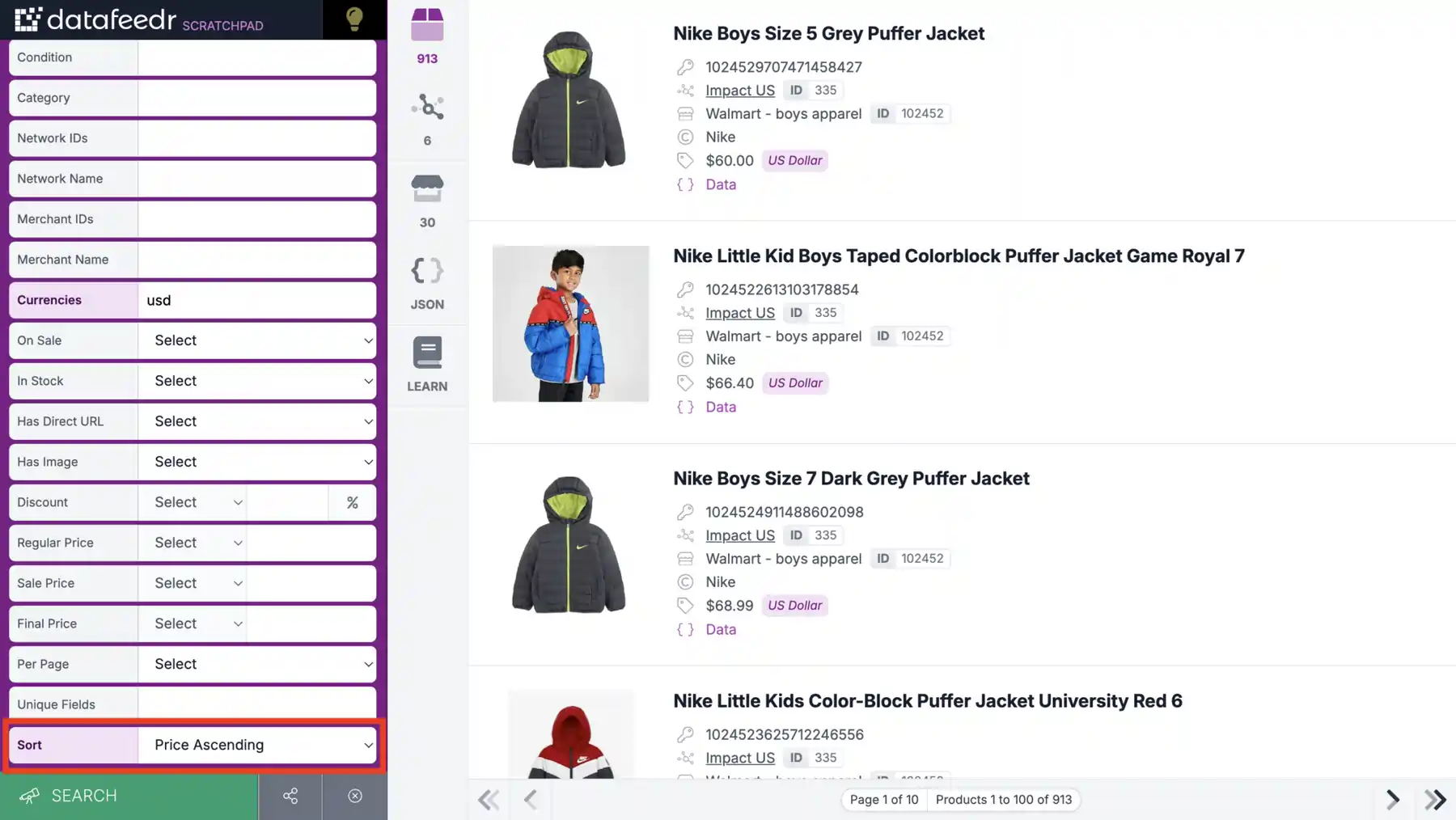
Datafeedr offers a dedicated Comparison Sets feature that allows you to display prices from products across more than 40 affiliate networks and 27,000+ retailers.
These comparison sets can be integrated directly into WooCommerce product pages or embedded within blog content using shortcodes. The data updates automatically based on your configured refresh intervals, ensuring pricing remains current.
The setup process is relatively straightforward, but it is less flexible compared to more advanced comparison tools. It does not include features such as price history graphs, price drop alerts, or EAN/GTIN-based automatic product matching.
- Maven Verdict: Content Egg Wins
Content Egg wins price comparison hands down. Price history tracking, GTIN product matching, and price drop email alerts give it features Datafeedr simply does not offer. For deal and comparison sites, Content Egg is the stronger pick.
Network and Merchant Support
More networks mean more earning opportunities. Here is how both plugins stack up.
Content Egg Network Coverage
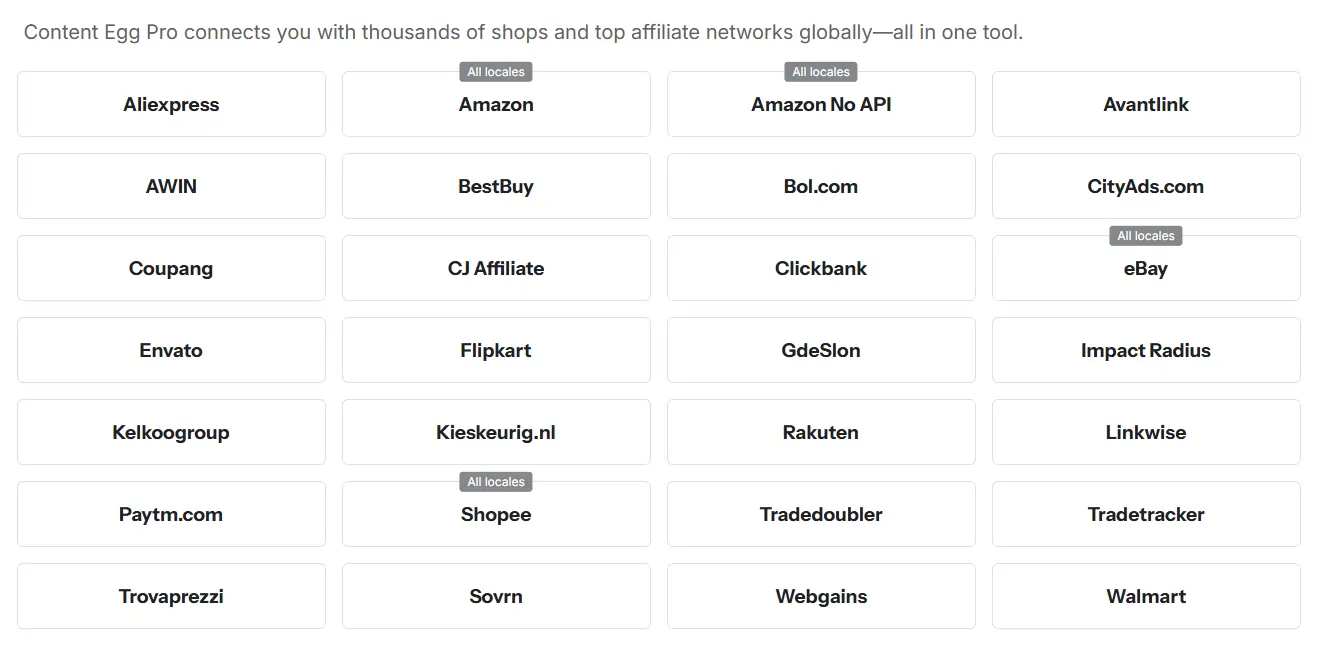
Content Egg supports more than 30 affiliate networks, including major platforms such as Amazon (all locales), eBay, AliExpress, AWIN, CJ Affiliate, Walmart, Rakuten, Flipkart, Impact Radius, and ClickBank.
It also includes coupon modules for networks like Admitad, CJ, Skimlinks, Tradedoubler, and TradeTracker. In addition to product feeds, Content Egg can pull in supplementary content such as images, videos, news articles, and Google Books data through its content modules.
If a specific affiliate network is not supported directly, you can use the Feed module (CSV, XML, or JSON) or the Affiliate Egg integration to extract product data directly from merchant websites.
Datafeedr Network Coverage
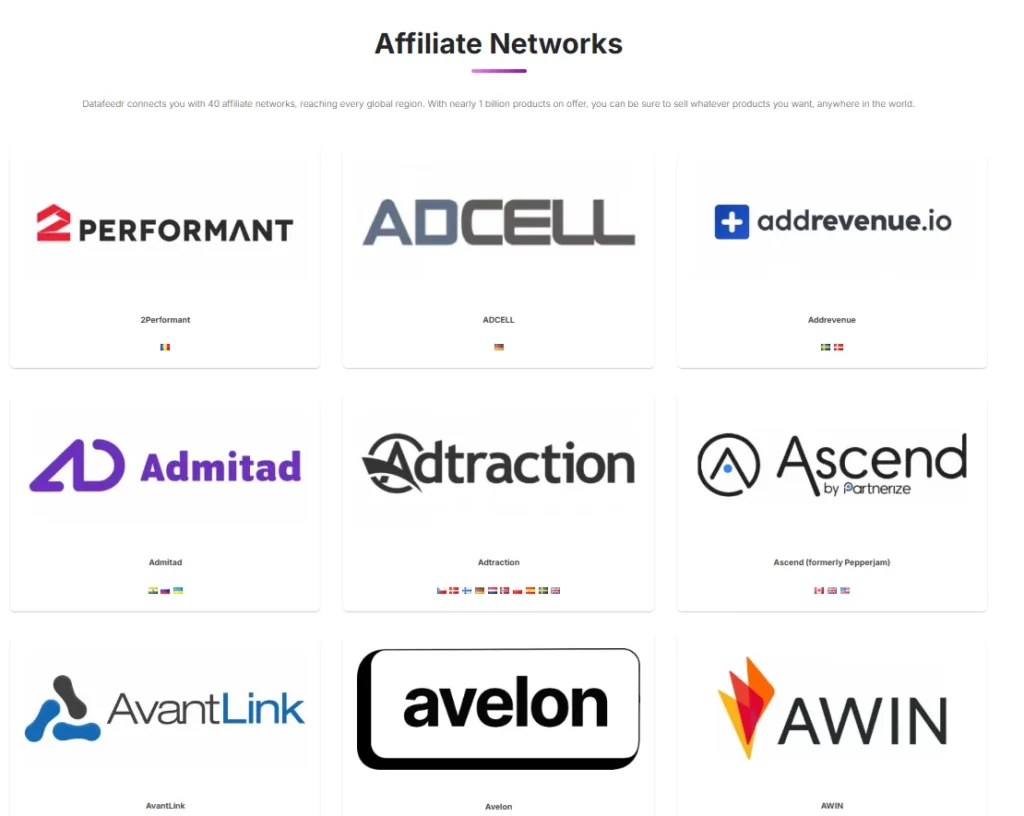
Datafeedr connects to more than 40 affiliate networks, giving access to over 27,000 merchants. Its product database contains close to 1 billion items.
It supports major networks such as ShareASale, AWIN, CJ Affiliate, Rakuten, Amazon, along with various regional affiliate programmes. The merchant coverage is extensive and suitable for large-scale affiliate stores.
However, Datafeedr is focused strictly on product data. It does not include coupon modules, content enrichment features, or the ability to pull additional media such as videos or external content.
- Maven Verdict: Datafeedr Wins
Datafeedr wins on raw network and merchant coverage. 40+ networks and 27,000+ merchants give it the largest affiliate product catalogue of any plugin we have tested. If store inventory size matters to you, Datafeedr delivers.
AI and Content Creation Tools
AI-powered content is a big deal in 2026 for affiliate content marketers.
Content Egg AI Features
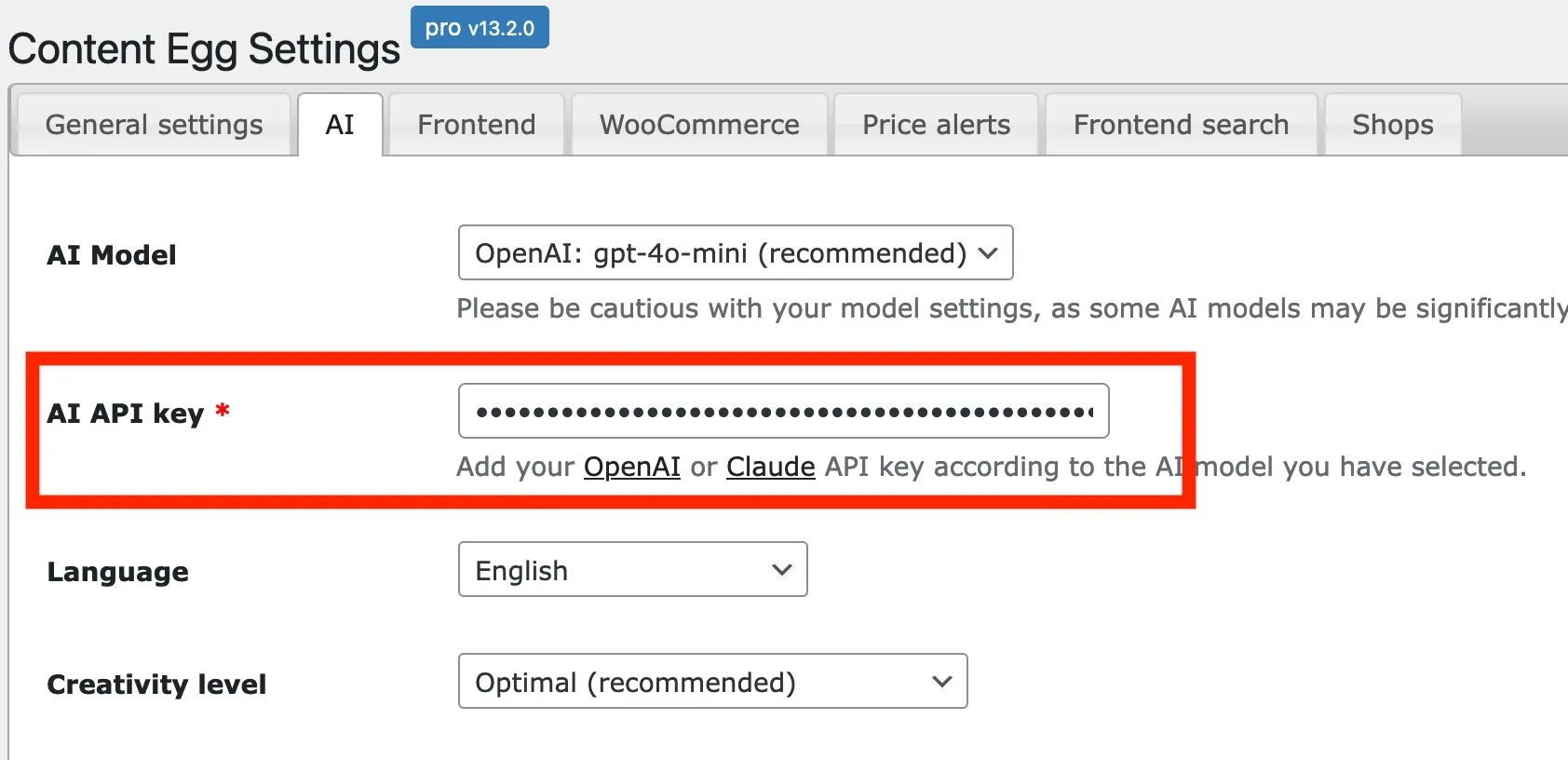
Content Egg integrates with AI models such as OpenAI GPT, Claude, and OpenRouter to support AI-powered content generation. It can automatically create product reviews, buying guides, and descriptions based on real product data.
One of its most notable features is the AI-powered Prefill function. This scans existing articles, identifies intent-based sections, and inserts relevant affiliate products with unique descriptions and trust badges. In our testing, applying this feature to older blog posts significantly improved affiliate link placement and content structure.
The plugin also allows you to build custom templates using ChatGPT. In addition, it can generate SEO-optimised titles and meta descriptions to support on-page optimisation.
Datafeedr AI Features
Datafeedr does not include any AI content generation features. It relies entirely on merchant-provided data such as product titles, descriptions, images, and pricing.
There is no built-in capability for generating unique content, AI-written reviews, or automated product descriptions.
For marketers focused on building content-heavy affiliate websites, this limitation represents an important distinction compared to tools that include AI-assisted content creation workflows.
- Maven Verdict: Content Egg Wins
No contest here. Content Egg’s AI content generation and automated product review writing put it leagues ahead. Datafeedr has zero AI capabilities in 2026.
Templates and Display Options
How products look on your site directly affects click-through rates.
Content Egg Templates
Content Egg includes more than 20 pre-built templates, including grid layouts, list views, product boxes, comparison tables, and deal display formats.
All templates are mobile-responsive and support dark mode. You can customise elements such as colours, product fields, and layout visibility, with full previews available directly inside the Gutenberg editor.
The plugin also supports bridge pages, allowing you to build product-focused landing pages designed to improve both SEO performance and conversion rates.
Datafeedr Templates
Datafeedr does not provide built-in product display templates. Instead, it relies entirely on your WooCommerce theme to control how products are presented.
As a result, product pages appear as standard WooCommerce listings. The Comparison Sets feature offers a simple, functional layout, but it is relatively basic in terms of design flexibility.
Any advanced customisation depends on your chosen theme and your ability to modify CSS or WooCommerce styling.
- Winner: Content Egg
Content Egg dominates the template variety. Over 20 high-converting display templates and bridge page support give it a clear design advantage over Datafeedr’s theme-dependent approach.
Pricing: The Real Cost Comparison
Budget matters. Here is what each plugin costs in 2026.
Content Egg Pricing
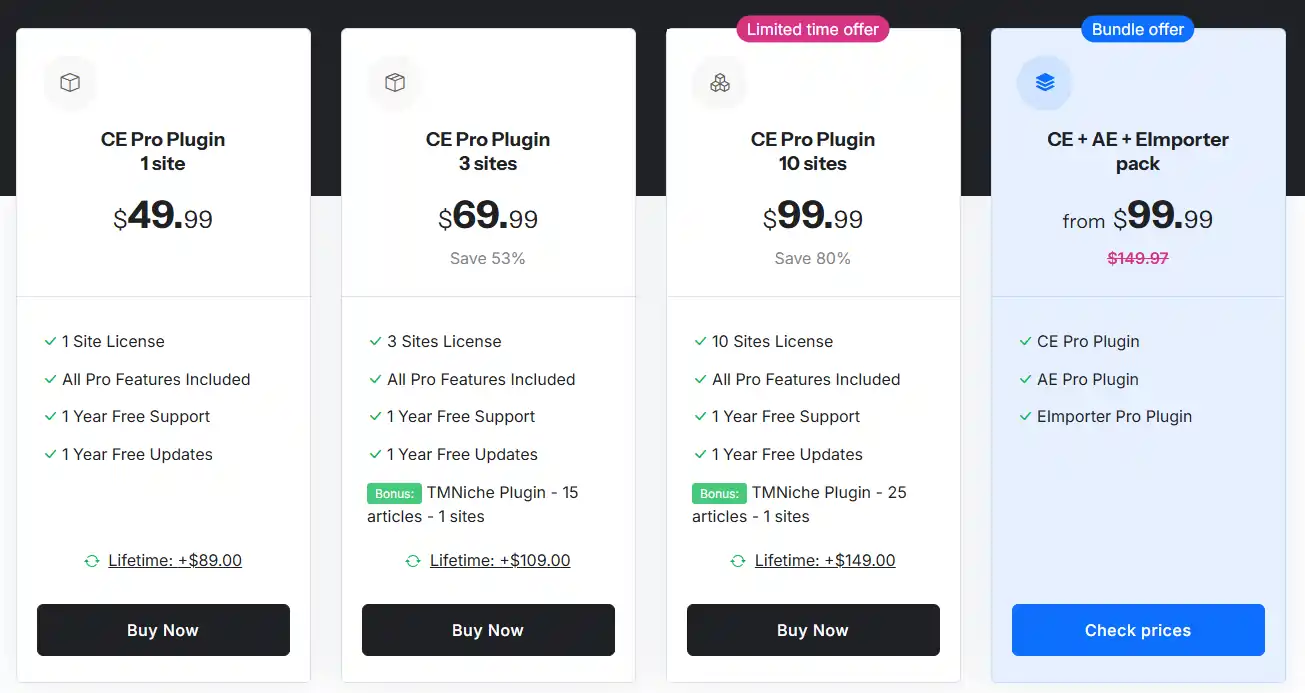
| Plan | Price | Sites |
|---|---|---|
| CE Pro 1 Site | $49.99/year | 1 |
| CE Pro 3 Sites | $69.99/year | 3 |
| CE Pro 10 Sites | $99.99/year | 10 |
One-time purchase with 12 months of updates and support. Renewal starts at $39.99/year. A lifetime add-on is available at checkout for updates forever.
Datafeedr Pricing
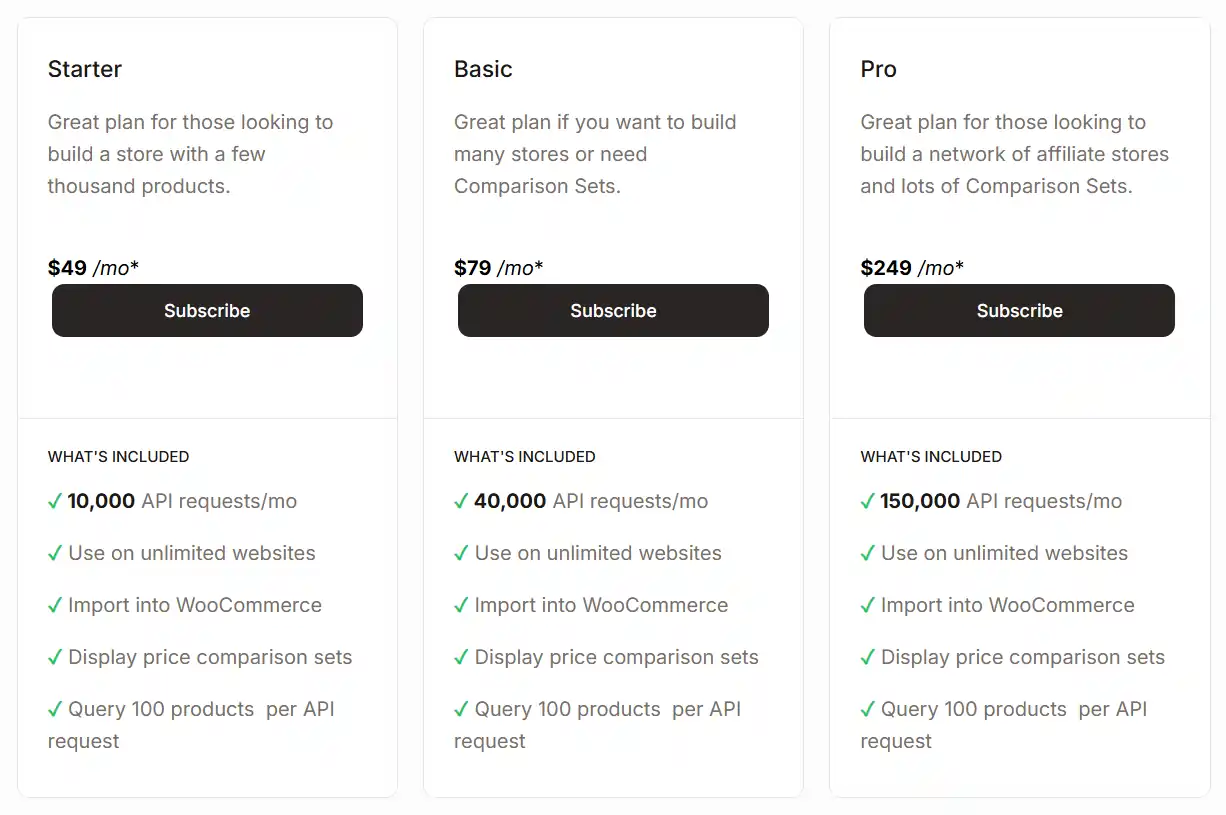
| Plan | Price | API Requests |
|---|---|---|
| Starter | $49/month | 10,000/mo |
| Basic | $79/month | 40,000/mo |
| Pro | $249/month | 150,000/mo |
All plans support unlimited websites. A 30-day money-back guarantee is included.
Cost Over 12 Months
| Plugin | Lowest Annual Cost |
|---|---|
| Content Egg (1 site) | $49.99 |
| Datafeedr (Starter) | $588 |
The difference is striking. Content Egg costs roughly 12x less per year at entry level.
- Maven Verdict: Content Egg Wins
Content Egg wins pricing by a landslide. A one-time $49.99 payment versus $588 annually is a massive gap. For budget-conscious affiliate marketers, Content Egg delivers far more value per pound spent.
Ease of Use and Learning Curve
A powerful plugin is useless if you cannot figure it out.
Content Egg Usability
Content Egg installs like a standard WordPress plugin. Module activation and API key setup take only a few minutes, and the integration with the Gutenberg block editor makes it easy to insert product blocks directly into content.
However, the large number of modules and configuration options can feel overwhelming at first. In our experience, it took about an hour to become fully comfortable with the interface. The documentation is detailed, and support responses are generally fast and helpful.
Datafeedr Usability
Datafeedr requires WooCommerce as its foundation. The setup process involves connecting API keys, creating saved searches, and configuring product update schedules.
The workflow is more linear and straightforward: search, filter, and import. Because it focuses on fewer functions, the system feels less complex overall. For users who want to quickly launch a product-focused affiliate store, Datafeedr is generally easier to understand and get started with.
- Winner: Datafeedr
Datafeedr wins on ease of use. Fewer features mean a shorter learning curve. If you want a store live quickly without fiddling with dozens of modules, Datafeedr gets you there faster.
Who Should Pick Which Plugin?
Both plugins serve affiliate marketers, but they suit different strategies.
Pick Content Egg if you:
- Build content-rich affiliate blogs and review sites
- Need AI-powered content creation for scaling
- Want price history, drop alerts, and comparison blocks
- Run multiple niches on a tight budget
- Need coupon, video, and image modules alongside products
Pick Datafeedr if you:
- Run large WooCommerce affiliate product stores
- Need access to 27,000+ merchants and 1 billion products
- Want automatic product addition and removal
- Operate unlimited sites on one subscription
- Prefer a straightforward store management workflow
Final elking Recommendation
After weeks of testing both plugins across real affiliate websites, our recommendation at ELKING goes to Content Egg for most affiliate marketers in 2026.
Content Egg delivers a broader feature set at a lower overall cost. With AI content tools, price comparison features with history tracking, 20+ ready-made templates, autoblogging capabilities, and coupon modules, it offers a more complete toolkit for content-driven affiliate sites.
Datafeedr, however, remains strong for large-scale WooCommerce-based product stores. If your strategy is focused purely on building a store with massive product catalogues, Datafeedr’s automated syncing system and extensive merchant coverage are difficult to match.
For most affiliate marketers building content-focused websites, Content Egg provides greater flexibility, more functionality, and better overall value for money.
ELKING Score:
- Content Egg: 4.8/5
- Datafeedr: 4.6/
👉 Our #1 Pick: Content Egg: the smarter choice for affiliate marketers who want automation, AI content, and affordability in one plugin.